Monday, August 9, 2010

Mohican References

Below is an updated list of published references on the Mohican Nation and its people.

Mohican Bibliography

Bradley, James W. (June 28, 2007). Before Albany: An Archaeology of Native-Dutch Relations in the Capital Region 1600-1664, New York State Museum, Albany, N.Y.

Brasser, Ted, "Mahican," Handbook of North American Indians, Vol. 15: Northeast, Smithsonian Institution, Washington, D.C.

Calloway, Colin G. (1995). The American Revolution in Indian Country: Crisis and Diversity in Native American Communities. Cambridge Studies in North American Indian History. Cambridge University Press, New York, N.Y.

Calloway, Colin (1990). The Western Abenakis of Vermont, 1600-1800: War, Migration and the Survival of an Indian People. University of Oklahoma Press, Norman, Okla.

Carlson, Richard G., editor. (1987). Rooted Like the Ash Trees: New England Indians and the Land. Eagle Wing Press, Inc., Naugatuck, Conn.

Day, Gordon (1981). “The Identity of the St. Francis Indians,” Canadian Ethnology Service Paper No. 71. Ottawa, Ont., Canada.

Shirley W. Dunn (October 30, 2009). The River Indians: Mohicans Making History. Purple Mountain Press, Fleischmans, NY.

Shirley W. Dunn, editor (September 30, 2005) Mohican Seminar 2: The Challege An Algonquian Peoples Seminar, New York State Museum, Albany, N.Y.

Dunn, Shirley, editor (2004). Mohican Seminar 1, The Continuance-An Algonquian Peoples Seminar, Selected Research Papers - 2000. New York State Museum Bulletin 501 2004. University of the State of New York, The State Education Department, Albany, N.Y.

Dunn, Shirley (2002). The Mohican World. Purple Mountain Press, Fleischmans, NY.

Dunn, Shirley (1994). The Mohicans and Their Land. Purple Mountain Press, Fleischmans, NY.

Frazier, Patrick (1992). The Mohicans of Stockbridge. University of Nebraska Press, Lincoln, Nebraska.

Haefeli, Evan and Kevin Sweeney (1997). “Revisiting The Redeemed Captive: New Perspectives on the 1704 Attack on Deerfield,” in Colin Calloway, After King Philip’s War: Presence and Persistence in Indian New England. University Press of New England, Hanover, N.H.

Haviland, William A. and Marjory W. Power (1994). The Original Vermonters: Native Inhabitants, Past and Present. University Press of New England, Hanover, N.H.

Miles, Lion G. (2009). A Life of John Konkapot. New Marlborough, MA, Historical Society.

Miles, Lion G. (2008). "The Stockbridge Indians in New York, 1784-1829," Proceedings of the Northeastern Native Peoples & the American Revolutionary Era: 1760-1810 Symposium,  Mashantucket Pequot Museum & Research Center, , Mashantucket, CT, pp. 32-48.

Miles, Lion G. (March 1994). "The Red Man Dispossessed: The Williams Family and the Alienation of Indian Land in Stockbridge, Massachusetts, 1736-1818." The New England Quarterly, Vol. LXVII, No. 1, pp. 46-76. Also anthologized in Alden T. Vaughan, ed. (1999), New England Encounters, Northeastern University Press, Boston, Mass., pp. 276-302.

James W. Oberly (February 1, 2008). A Nation Of Statemen: The Political Culture of the Stockbridge-Munsee Mohicans, 1815-1972 (Civilization of the American Indian). University of Oklahoma Press.

Smith, J. Michael (Spring 2010). "Wappinger Kinship Associations: Daniel Nimham's Family Tree," The Hudson River Valley Review, Vol. 26, No. 2, pp. 69-98.

Rachel Wheeler (June 2008). To Live Upon Hope: Mohicans and Missionaries in the Eighteenth-century Northeast. Cornell University Press, Ithaca, N.Y.

Monday, August 2, 2010

Mohican Nation

Some of my ancestors were Mohican, an Algonkin nation that was once located in the upper Hudson River Valley and western Massachusetts.  I grew up in the original homeland of the Mohican Nation and feel a strong attachment to the land here.  Because the council fire of the Nation moved away, first to western New York, and then on through Indiana to Wisconsin, some people fail to recognize the Mohicans' connection to the area.  The Mohicans are also confused with the Mohawks, who were from a different language and cultural group.  They can also be referred to as Mahicans.  "Mahican" comes from the Dutch term "Mahikander."  I use the term the nation uses.  Mohican has also been confused with Mohegan, even by the Library of Congress.  The Mohegan Nation is centered in southern Connecticut and the two have been separate nations since at least the 1600s. 

I have collected some interesting links for the history and culture of the Mohican Nation and its people.

Mohican Links

History

Homepage of the Mohican Nation, Stockbridge-Munsee Band in Wisconsin
A Mahican history from Dickshovel.com
Mohican history from the Mohican Press
The Gnadenhutten Massacre
Native American Facts For Kids: Mohican Nation
Algonkin Church History
Contemporary history of the Mohicans in Wisconsin
Leeds Flat Victory
Native American Languages of the Americas: Mohican
Moravian Origins of J.F. Cooper's Mohicans
Stockbridge Students at Carlisle Indian School
National Portrait Gallery Portrait of Etow Oh Koam
Portrait of Austin Quinney

Mohican men fought with the British in the French & Indian War.

Rogers Island
Fort William Henry

The Mohicans were one of the few Native nations that fought on the Patriot side of the American Revolution.  The shrunken nation was dealt a terrible blow when they lost 17 warriors in an ambush on August 31, 1778.

Nimham's Indian Company Of 1778: the Events Leading Up To The Stockbridge Massacre
Death in the Bronx
Indian Field Today

Experience Mohican History and Culture

Mohican Nation Cultural Tour in Wisconsin
Mohican Nation Pow Wow
Muhheconneew Press
Mohican Trail Historial Driving Tour in New York (a partial tour only of the northern portion of the Mohican homeland)
The Stockbridge Mission House
Gnadenhutten Historical Park and Museum

Contemporary Mohican Artists

Bill Miller:  winner of 9 Native American Music Awards and 3 Grammy Awards
Brent Michael Davids, composer.  He has garnered awards from Ascap, Nea, Rockefeller Foundation, In-Vision,  Meet-The-Composer, Bush Foundation, McKnight Foundation, and Jerome Foundation, among others.
Sheila Tousey, Actor and Producer

Wednesday, July 21, 2010

Keepers of the Circle Pow Wow 2010

Last weekend the Keepers of the Circle held their fourth pow wow at their house in Rotterdam Junction, New York. The Keepers is a Native American educational and cultural association begun 20 years ago whose first meetings were held in the Friends’ Meeting House in Albany. I first became a member in 1995 and met several lifelong friends there. The Keepers is an intertribal group and acts with the next seven generations in mind. The host drums were White Buffalo and the Nimham Mountain Singers. Head dancers were Timberwolf Lamia and Kathy Johnston (Walks Not Alone).


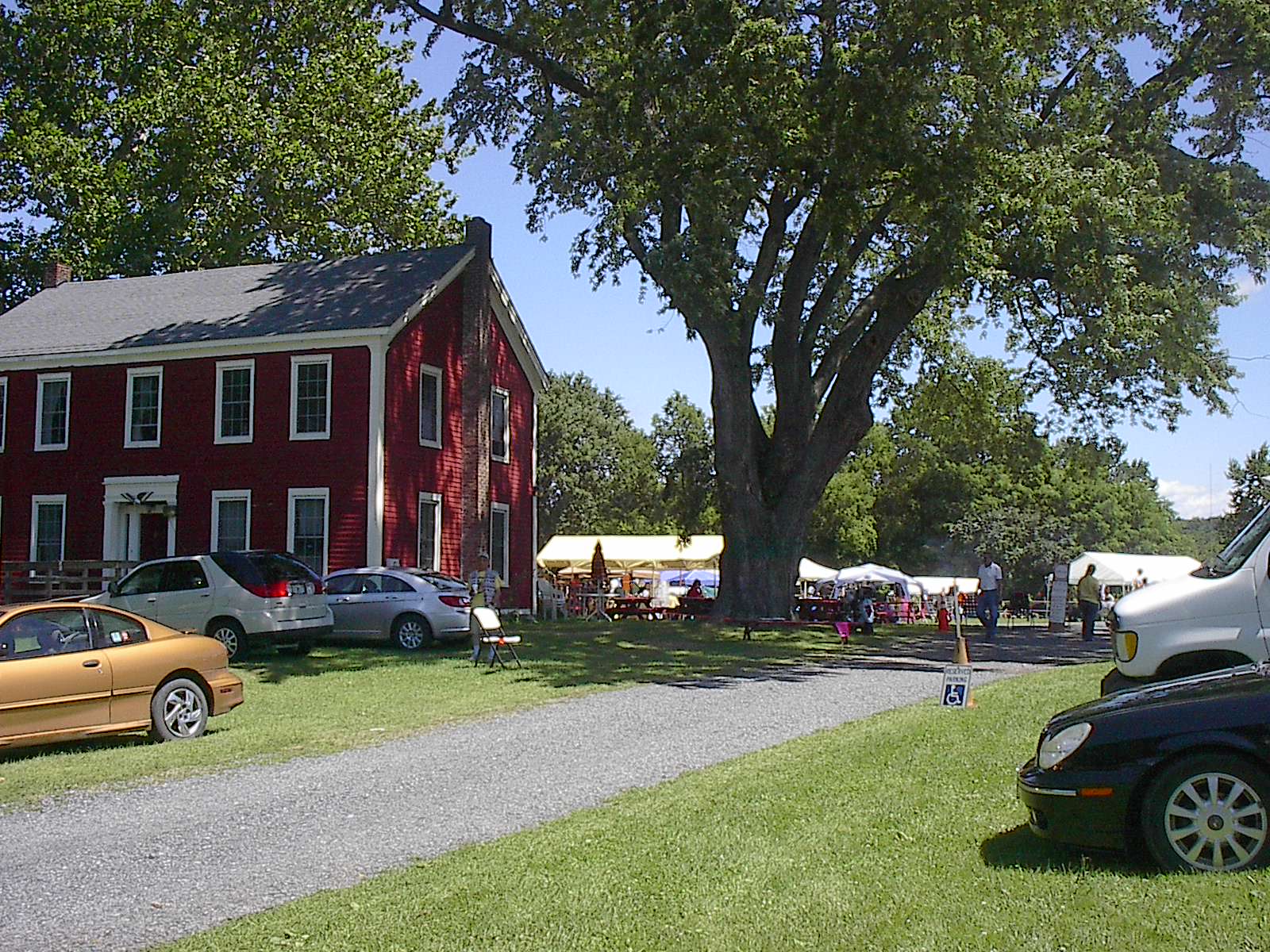
I don't think the location could be much more lovely.

Me with the head dancers

Some lovely female dancers


At pow wows I have always met people anxious to find out who their Native ancestors were. I have always wanted to find relatives and other people like me. I volunteered to have a genealogy table at the pow wow. Thankfully a friend let me borrow his canopy for protection from the sun. I created a display of documents to look for in researching Native family. Another friend was supposed to be there representing Mohican history, but that didn’t happen. It was left to me and my Mohican elder when she was there Sunday afternoon.

Two photos of my double-sided display.


I do have one issue that I think won’t ever be settled peacefully. I believe the house is on Mohican land. The Mohawks believe the house is on their land because through a treaty that the Dutch insisted on they were awarded land west of Albany. How is this different than the Europeans settlers being given Mohican land? When you come down to it, it isn’t. It is Mohican land. My name is Loving Dove and I have spoken.  Aho.

Friday, May 28, 2010

Notes on a Nature Walk : May 20

One of my favorite walks is along the Mohawk River in Niskayuna on the Mohawk Hudson Bike Hike Trail, created out of an old railway line. It’s a popular park and it was busy today, with many people walking, running and biking. People older than me were roller-skating and roller-skiing. Two men were on the shore fishing. Another woman walking wore a black and white print blouse, a black skirt and bright red socks. I didn’t feel as though the place were crowded, though.

People in this area have to loosen up, smile and say hello more. Only about 25% of the people I encountered in the park and later in the supermarket greeted me. It’s very sad to experience. According to an U. S. Army veteran friend, it was expected of him to greet the other person in the foreign countries where he was stationed. Friendliness to me is a virtue. Why can’t people here be friendly?

I think of the place more as a park than a trail. I like to go there because of the natural landscaping on both sides of the trail. I’m in contact with Mother Earth and the Animal People. There is always something to pay attention to and learn from. I don’t need to take an MP3 player with me.

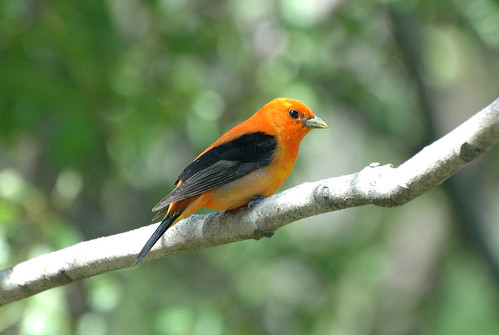
I love listening to the many varieties of bird calls and songs and trying to figure out what birds are there and what they’re doing. I saw two birds that were orange variants of scarlet tanagers scraping. I surprised two chipmunks on the grass shoulder alongside the path. They both scurried back into the bush. Since moving back into an urban environment in 1996, I rarely see chipmunks anymore. I always found them very appealing little creatures.


On my return back to the car a bullfrog began calling. I don’t recall hearing one since I left my hometown of Philmont in 1985. There I lived next to the reservoir and one hallmark of spring was the loud chorus of bullfrogs that I grew up loving. I’ve been looking for the Abenaki story about Gluskabe and the magical frog Oglubemu, but haven’t found it. Joseph Bruchac includes it on a storytelling tape.

My last trip to the trail was in late March when plant life was just beginning to wake up. It was nice to see the changes. My very first impression walking to the trail was that it smelled so nice there. The pendulous clusters of creamy blossoms draping the black locust trees were no doubt responsible. Blooming wild honeysuckle bushes were scattered alongside the trail, as well as deciduous trees with tiny pine cones. They’re a type of alder. There was a couple clumps of bright white bloodroot and Dame’s Rockets, or wild phlox. They are so pretty and fragrant. If you looked carefully there were beautiful yellow iris filling the mud flats along the river banks. The flowers were shaped like Siberian or Japanese iris, not bearded. They’re naturalized invasives from Eurasia.


For the past week I’ve had trouble getting to sleep. The day before I didn’t fall asleep until 6 a.m. I only had 5 hours of sleep. It was a beautiful late spring day. I made myself go out to the park. I started walking with more energy than I’ve had for ages and walked farther than I ever had. I thought I was staying awake because of my antihistamine. After enjoying this walk so much I think it’s safe to believe that I’m finally getting the help I’ve craved from my allergy shots.

I was distressed to see that there was a new roadbed cutting across the trail. It seems that the powers that be decided it was cheaper to build this than replace the bridge that crossed the trail. However, I don’t like seeing the environment further disrupted by the roadbed cutting across the river channel, the ugly riprap and knowing that pollutants will flow off the surface into the water. It was bad enough that the railroad was built along the river shore to forever alter the ecosystem in the first place. At least nature was allowed to refresh the area and it’s open to the public to enjoy, unlike the New York state parks that have recently been closed.

Tuesday, April 20, 2010

Alexander M. Thatcher of Massachusetts

I have been pursuing information on my great-great-grandfather Alexander M. Thatcher for a long time with few results.  His birth date has been given as 18 July 1818.  The information on his death certificate doesn’t seem to be true.  I haven’t found a Thomas Thatcher in Pennsylvania who could have been his father.  He first appeared in documents when he married Huldah BISHOP, 14 Aug 1844, in Tyringham, Berkshire Co., Mass.  The marriage record said he was a resident of Northampton, Mass., at the time.  The family lived in Lee and Housatonic in Berkshire Co., Mass.  There is another Thatcher family in the Lee area that I haven’t found a connection to.  Alexander died from typhoid fever on 13 Jan 1880 in Great Barrington, MA.  The death notice in the paper was two lines long and gave no helpful information.  Although I don’t have census information entered into my computer program, I know I have the existing census records for him and there was no information that was helpful.

Children of Alexander Thatcher and Huldah Bishop:

Julia Maria Thatcher, b. 7 July 1845, MA, d. 11 June 1855.
Eugene Stephen Thatcher, b. 19 Aug 1848, d. 23 Nov 1899, m. Alice Cordelia Rewey 6 Sep 1879
Agnes Jane Thatcher, b. July 1850.
Susan Evaline Thatcher, b. ca 1852, died 31 Aug 1875
Albert L. Thatcher, b. ca 1854, d. 12 Oct 1857
Spencer W. Thatcher, b. ca 1856, d. 8 Oct 1857
Cora Leona Thatcher, b. 30 Sep 1858, d. 18 Jul 1892, m. Henry Franklin Winchell 11 Aug 1857
Arthur L. Thatcher, b. 1861, d. 1944
Caroline Thatcher, b. 1 Sep 1863, d. 28 Dec 1943

I think of the state as unknown because three different states have been given. Although his father's name was listed as Joseph Thatcher on his death certificate, he doesn't fit with the family of any known Joseph Thatcher. I have marriage, death and census records, as well as a deed and an obituary.  They give very little information.  There are few photos of family members.

I have developed four hypotheses about his family background.
  1. Alexander came from somewhere along the Atlantic seacoast in Massachusetts.  So far I haven't found him in any available Massachusetts records.
  2. Immigrants to Northampton also came from along the Connecticut River Valley. I learned that some Thatchers in New Hampshire and Vermont originally came from southern Connecticut.  I need to go to the library of the Connecticut Valley Historical Society in Springfield, Mass., to search through its records.
  3. Alexander's real last name was something else.  In upstate New York and New England it's common for French-speaking people to move down from Canada and change their name to something English. This was especially common if the individual also had Native ancestry.  My great-great-grandfather's real last name could have been LeChaume, Chaume or Chaumet.  For this I also have to go to the Connecticut Valley Historical Society since they have border crossing and other French Canadian records.
  4. I'd almost forgotten the era that Alexander was born in.  Slavery was still an institution in the South.  It is possible that he was a light-skinned black who escaped on the Underground Railroad going along the Mid-Atlantic and took the last name of a conductor who helped him.  The Thatchers in eastern Pennsylvania and New Jersey were Quaker, who were early abolitionists.  DNA testing of a male relative may help here.

Friday, December 25, 2009

A Public Radio Christmas

As a single woman, I find the holiday season to be rather lonely. National Public Radio (NPR) definitely cheers the season up for me.

Today I caught the last part of Jonathan Winter's reading of Charles Dickens' A Christmas Carol.

Accompanying me down the road to my mother's place was Jay Ungar and Molly Mason presenting The Pleasures of Winter. I greaty enjoyed hearing unfamiliar Christmas music, French Canadian and Appalachian shape note singing. You can go to PRX to listen to it or purchase the album recorded live in Poughkeepsie.

On the way from my mother's I was sorry to hear I missed part of A Car Talk Christmas Carol with the Magliozzi Brothers having irreverent fun with the holiday. You can go to their web site to hear the fun you missed.

After that I learned how the Christmas Price Index issued by PNC Wealth Management changed from Marketplace. Find out for yourself if it's still affordable here.

NPR also reports that some homeowners are giving up paying their mortgages because the value of their homes have plummeted. The mortality rate for the H1N1 virus among American Indians and Alaskan Natives is four times higher than for the rest of the American population.

We need some holiday cheer wherever we can find it.


Thursday, December 3, 2009

The Beman Brick Wall

Every person researching his or her family eventually does what we call hitting a brick wall. S/he finds a person for whom s/he can’t find information on parents or family. It’s not uncommon to have several brick walls. One of mine has been Lydia, the wife of Isaac Beman. Isaac was born 7 January 1755 in the Town of Kent, Litchfield County, Connecticut. His parents were Thomas Beman and Bethia Tracy. It is documented that his wife’s first name was Lydia, but I’ve been unable to find more information on their marriage or Lydia’s family.

This was a time when researching more than one family was helpful. I found my way to a genealogy board on Northeastern Native American genealogy that no longer exists and information on Zephaniah Wix and his family. I found some interesting coincidences.

Isaac Beman’s hometown of Kent, Conn., bordered on the west the Town of Cornwall, where the Wixes lived. Isaac first enlisted to fight on the Patriot side of the American Revolution in 1775 from the Town of Warren. Lydia’s brother Uriah, two years older than Isaac, also served. He first enlisted 12 June 1776. At one time he served under Captain Eli Catlin, the father of artist George Catlin. For almost a year Isaac and Uriah were stationed at the same place at the same time, including summer months in Berkshire County, just over the border from Northwest Connecticut. It seems reasonable since there was no fighting in the area that both men would take advantage and go home to let their families know they were all right. Later in 1777 both men participated in the defense of Philadelphia. After Zephaniah died by 24 January 1777 the family moved to the Town of Warren where Isaac already had contacts.

Isaac and Lydia settled in the Town of Chatham, Columbia County, N.Y. Isaac became active in the North Chatham Baptist Church. They had ten children:

Lydia Beman was born in 1780.
Jacob Beman, born 10 Mar 1780; married Achsah Conger, 7 Dec 1814; died 15 Feb 1868, Bennington, Bennington Co., VT.
Deborah Beman, born 1782; married Joseph Hicks Rider, 1799, Chatham, Columbia Co., NY, USA; died 1818.
Abigail Beman was born in 1784.
Elizabeth Beman was born in 1786.
Delilah Beman, born 18 May 1790; married Abraham Ashley, 1810; died 7 Dec 1853, Chatham, Columbia Co., NY.
Isaac Beman was born on 11 Mar 1792.
Esther Beman was born in 1794.
Melinda Beman was born in 1796.
Alexis Beman, born Jun 1804, , , CT, USA; married Mary Modher, abt 1825, Oakland, , MI, USA; died 1856, Highland Township, , MI, USA.

I have a feeling that my ancestors traveled a lot more than we think. I don’t know how my ancestor John L. Winchell who was born in northwestern Connecticut and lived in Dutchess County and Berkshire County met and married a Quaker woman from the Town of Chatham.

A few years ago I bought a portrait in a local consignment shop because the woman in it looked so much like my paternal grandfather. I wish the owner had a provenance for it, but I have the feeling it is my great-great-grandmother Winifred Olivia Ashley. Whoever she is, her features say she had Indian ancestry. I include a photo of the portrait and a photo of my paternal grandfather Earl Winchell with his daughter-in-law Cathy Collier Winchell.


Winifred was the daughter of Delilah Beman and Abraham Ashley Sr. My Aunt Kate said she was told that the Indian in the family was Pequot. I’ve found Mohican and Wappinger in the family so far, not Pequot. There’s also the possibility it was Paugusett since there were Paugusett people documented in the area and the first chief of the Schaghticokes in Kent was actually from that group. In addition last year I had my MtDNA tested by the Sorenson Molecular Genealogy Foundation. I found it was very close to that of the Wix family. I don’t understand how the testing works, but that was the result I found.

I think I have good circumstantial evidence that Isaac Beman’s wife was Lydia Wix from the Town of Cornwall, CT. I hope sometime in the future to find evidence that will prove this.