After
1492 until 1620 explorers, traders, fishermen routinely raided the east coast
for Native American slaves to make extra profit. These enterprising men include Christopher
Columbus, John Cabot, Gaspar de Luxan, Antonio de Espejo, Portuguese explorer
Gaspar Corte-Real, Giovanni Verrazano and Jacques Cartier.
In
1492 Christopher Columbus, kidnapped 25 Native Americans to take back to Spain
as slaves. A few years later to raise
money he began sending Caribbean Natives to Spain to be sold in the Azores,
Canaries, Seville and other mainland cities.
He had the deliberate policy of using Native slaves and labor to finance
his conquest of new lands. Within the
first decade, 3,000 to 6,000 Native American slaves went sent to Seville,
Spain, for sale. He enslaved the same number to put to work in early mines and
plantations in the Caribbean.

After
Queen Isabella ruled that Native Americans of the New World belonged to the
monarchy and couldn’t be sold in Spain, he sold them elsewhere, in the Canaries,
Azores, Cape Verdes and the Caribbean. By
1519 Spanish nearly exhausted the population of Native Americans in Caribbean and had to
begin importing African slaves. In the 1600s when the French couldn’t make an
alliance with the Haudenosaunee, they captured them and sold them to work as
galley slaves for the king.
All
early colonies on the North American continent enslaved Native Americans. Male Native slaves were impressed as sailors and
soldiers by almost every European nation they had contact with because the laws
required slaveholders to furnish slaves for combat in timers of emergency. In 1778 during the American Revolution,
General George Washington requested slaves for battalions. The Rhode Island assembly sent some who were
Native American.
One
of the most famous slaves was Squanto, one of the Native Americans who
befriended the Pilgrims. He was captured
by English slave trader Thomas Hunt who raided Patuxet and captured him along
with 27 more. Squanto was sold in Málaga, Spain. He escaped and worked his way back to Massachusetts
through England and Newfoundland. He
arrived back at Patuxet to find the village deserted from slave raids and
disease.

Beginning
in 1634, the Massachusetts Bay Colony, the Plymouth and Saybrook colonies began
a war against the Pequots along with their Native American allies the
Narangansetts and Mohegans. In November
1636 they attacked the Pequot village of Mystic. The survivors were cornered and fought in a
Connecticut Swamp. By September 1638 the
200 survivors had no place to go and surrendered to lives of slavery. They were divided between Massachusetts where
they were sold and Connecticut where they were kept as domestics.
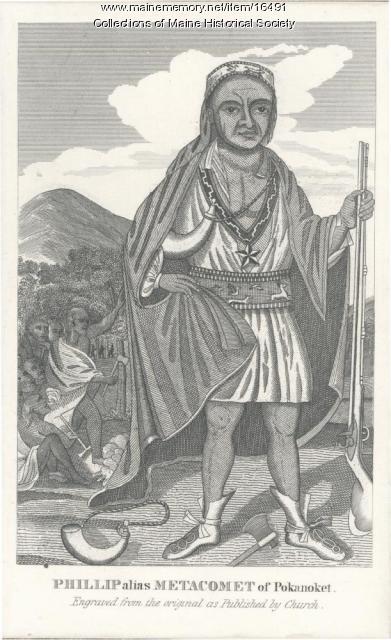
King
Philip’s War in New England from 1675 to 1678 was the New England Native
Americans’ last major attempt to rid their land of the European settlers. After the Wampanoag leader Metacom (King
Philip) was assassinated in August 1676 Europeans began raiding villages for
slaves. Older males were killed and younger
Native Americanss sold into slavery in Spain and the Caribbean. The widow
and son of Metacom were sold in West Indies for 30 shillings each. Women and children could be and were enslaved.
One
reason slaves were shipped elsewhere for sale was to reduce the danger of
Native attacks. As colonies became
stronger and Native communities weaker, the colonies often exchanged slaves
with different colonies. New England
settlers used Native American slaves in manual trade: carpenters, coopers, wheelwrights,
butchers. Native American women learned
domestic tasks and usually work in one household for years.
The
colonial governments encouraged the wars for dominance waged by their Native American
allies. The members of the nations
unwilling to submit were often sold as slaves.
This was especially true in the Southeast where the Native allies were
encouraged to capture others to sell for cheap trade goods. The Europeans used the profit to finance new
wars of conquest. In 1663 Native tribes raided
for slaves along the Carolina coast. Charleston
became the primary exit point for slaves
that included Cherokees, Creeks, and Choctaws.
There were long trade lines across southern country to Mississippi
River. Victims were first obtained by
warfare, and then by kidnapping. By the 1760s
lines of slaves were marching through the Carolina backcountry to the coast as
much as they were filing through the African interior to the trading ports on
the African coast.