Showing posts with label Native American. Show all posts

Thursday, December 5, 2013

Arkville Cave

Earlier in the blog post Indian Shelter Excavated  I wrote about an excavation Ralph S. Ives made in 1934.  It might be the cave described in the transcribed newspaper article below.


Attorney Ives Describes Cave

Rich Find Within 100 Feet of Main Highway

Attorney Ralph S. Ives of Roxbury recently made a speech before the Oneonta Kiwanis club in which he described the Indian cave at Arkville,
The Oneonta Star gives the following report of the speech by Mr. Ives.
Mr. Ives explained that he had been collecting Indian flints and relics since he was a lad, told how the hobby had grown with him, and of the interest with which he read about excavations in the Pyrenees, arousing a desire to some day take part in some original excavations himself.  He then relate events during his boyhood at Margaretville and of the stories about the Indian cave at Arkville about which he heard throughout his life, spent in that vicinity and Roxbury.
Cave Within View of Highway
While drawing a deed this spring, mention was made in the papers of the Indian cave, and he determined to visit it.  The cave faces southeast on a mountain near the Arkville railroad station, the mouth being readily seen from the highway which runs within 100 feet of it.  The cave is about 30 feet long, about 20 feet deep, and had a vaulted roof about eight feet from the ground at the time digging operations were started this spring.
Because the work had to be done in spare time, activities were carried on quietly, but in five or six weeks the excavation was completed.  Because few perfect specimens have been found in caves, Mr. Ives and his sons started their digging, carefully with stiff case knives, about 10 feet from the opening of the cave.  Arrowpoints and scrapers of the Algonquin type were found, together with broken bone implements and pottery, before excavation was started within the cave.
Inside the rock shelter a rock floor was found under three or four inches of loose soil, this base being flatiron-shaped with dirt on the sides. On the north side of this floor, definite layers of  charcoal were found to a depth of two feet and one-half, indicating that the camp site had been used for centuries.  At a depth of four and one-half feet below the floor were found a number of perfect bone implements, needles, awls, bone arrowpoints, and broken pieces.  Because of their age, these pieces of bone were very brittle and it was necessary to protect them under glass.  A small display case of these articles was exhibited.
Estimates Age at 2,500 Years
In fixing the age of finds in the cave, which Mr. Ives estimated at from 600 to 5,000 years, he explained that the Algonquins lived in this vicinity before the Iroquois.  He considers it most probable that some of the bone implements are 2,500 years old.  He also expressed the conviction that bone was used fully as much as stone  by the early Indian and said that he hopes some day to establish that wooden implements were also common.
Excavating to a depth of four feet, the party also found fragments of pottery and fresh-water clamshells, probably used as ladles or spoons.  Portions of two pipes, rubbing stones, drill points, bases of drills, fishnet sinkers, arrow points and scrapers were also found in substantial quantities in this strata. The rusted blade of a knife was found some distance below the surface in the cave, indicating to Mr. Ives that others had explored it mysteries, probably many years ago.

Catskill Mountain News, 22 June 1934, Margaretville, NY

Wednesday, October 30, 2013

Ives Collection Donated to Cooperstown Indian Museum


Museum Gets Indian Relics


According to Clyde B. Olson, director of the Cooperstown Indian Museum, an Indian collection with material dating back to more than 5,000 years, has been donated to the museum.

The collection was gathered over a 70 year period by Ralph S. Ives, a Roxbury attorney.  Mr. Ives died in the fall of 1960.

Mr. Olson said that while practicing law, Mr. Ives also was practicing a hobby of collecting Indian material in a more or less scientific manner, which makes the collection that much more valuable.  The collection comes from the east and west branches of the Delaware headwaters and contains also a great deal of rock shelter material.

The Ives collection dates back more than 5,000 years, including the Colonial Period and will be on display and available to students of archeology to study at the Cooperstown Indian Museum, Mr. Olson stated.

The Museum, located at the lake front at the foot of Pioneer Street, was formerly called the American Indian Museum.


The Otsego Farmer, 9 February 1961

The Cooperstown Indian Museum no longer exists.  I'll see if I can find out what happened to it, especially the Ives collection. 

Update 

I contacted Hugh MacDougall, the Cooperstown historian.  He then contacted Sarah Wilcox of the New York State Historical Association Research Library.  When the Cooperstown Indian Museum closed, most of its contents were transferred to the New York State Historical Association.  Unfortunately, the documentation wasn't transferred as well.  It seems very likely that Mr. Ives' collection is there, but not identified as such.  It's extremely unfortunate that the documentation was lost because that established the historical place of the finds.  Once again, Mohican history is lost.  It seems like the closest thing there is to existing documentation are these newspaper articles.

Thursday, December 13, 2012

Europeans Adopted Native Hunting and Fishing Technology

Part 4 of the series Are Native Americans Relevant?

The early colonists had virtually no hunting experience because fish, fowl and game belonged to the aristocracy from whom it was a ritualized sport.  Because Europeans were divided into strict social and occupational classes, they didn’t know how to do things they weren’t trained to do.  The first colonists didn’t know how to hunt for food and had to depend upon the Native Americans either to bring them game or to teach them to hunt it themselves.  However, in Canada Natives supplied fresh, smoked and prepared meats and pemmican, mainly to the fur trading companies.

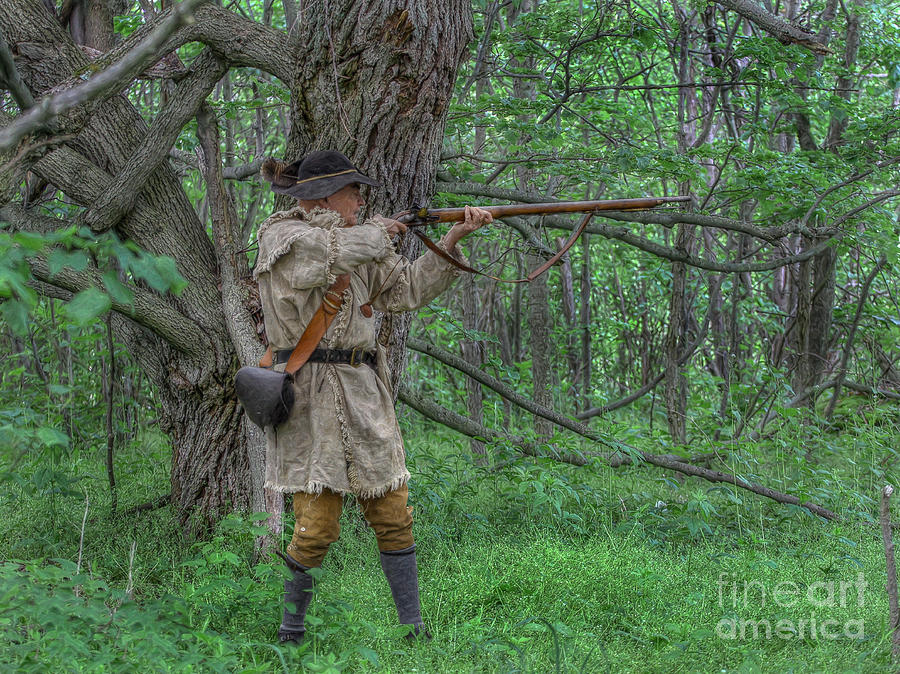
Once the colonists learned how to hunt, they continued to use many Native techniques.  Frontiersman used Native style clothing and equipment.  They adopted the use of  decoys, camouflage and hides.  They traveled through the countryside using Native-made canoes, kayaks, snowshoes, toboggans, waterproof ponchos, anoraks and snow goggles. 

 
Native fish became important with the arrival of the first European sailors and large scale commercial fishing began.  For the first century after 1492 the most important native resource was the cod off Newfoundland and Labrador.  There was a steady flow of European fishing vessels after 1500.  Dried cod became a staple protein for the urban poor in Europe.  Native Americans were kidnapped and made to work in the fishing and whaling industries as a quick way for the industry to gain the Native fishermen’s knowledge.  After gaining their freedom Native Americans kept fishing and whaling. 
 
 
Native Americans living in on the coasts survived primarily on fish and other marine life.  Native Americans constructed fish weirs to control the location and habitat of the fish.  Commercial fisherman adopted the use of their gill nets.  Natives still participate in the modern commercial fish market.

Tuesday, November 27, 2012

Native Americans Bred 3/5 of The World’s Cultivated Food Crops

Part 2 of the series Are Native Americans Relevant?

The Native Americans of the Andes first cultivated potatoes at least 4,000 years ago.  At the time of Spanish conquest there were approximately 3,000 different types of potatoes in the Andes.  The early Native Americans prized diversity of crops, creating different kinds of plant for every type of sun, soil and moisture condition.  They bred potatoes in a variety of sizes, textures, colors and tastes.  They bred for other properties as well:  rates of maturation, water requirements, storage, and livestock feed.  In addition, they grew several root crops not currently used.  They grew diverse kinds of corn, amaranth and quinoa.


 Using these methods, the people were assured of having food in case of problematic weather or if disease struck some of the vegetables.  In contrast, only 250 varieties of potatoes are grown in North American now, and no more than 20 make up 3/4s of the potato harvest.   North American crops are at risk.
Early Northern European and western European countries like Russia, Germany, England and Scandinavia suffered from periodic famines.  Corn and potatoes broke the cycle of starvation.  A field of potatoes produces more food and nutrition.  They are more reliable and require less labor than the same field planted in any grain and they thrived in Europe.  They were a new source of Vitamin C that greatly improved people’s health.  The population grew 60 percent and enabled power shifts in Europe.  
  
Europe’s protein supply increased with the great variety of new beans:  kidney, string, snap, frijoles, common, scarlet runner, butter, lima, navy, pole, French, Rangoon, Burma, Madagascar.
Sunflowers gave the colder climates a reliable source of edible oil.  Sunflower seeds have become popular as snack food and mix-ins for food.
Corn was used primarily to feed livestock in Europe. Only in some countries did people consume corn.  Europeans increased their intake of all animal products and developed a craving for American beef and ham.  Native plants were taken to African and Asia.  Corn, peanuts and cassava enabled African population to grow.  Cultures across the globe added new Native American foods to their diet.
In the last decade of the 20th century, native plants were 1/3 of the annual U.S. harvest, corn was 15%.  In 1989 potatoes, tomatoes, peanuts each sold for more than $1 billion, sunflower seeds close behind.  Foreign markets want farm product and its byproducts.